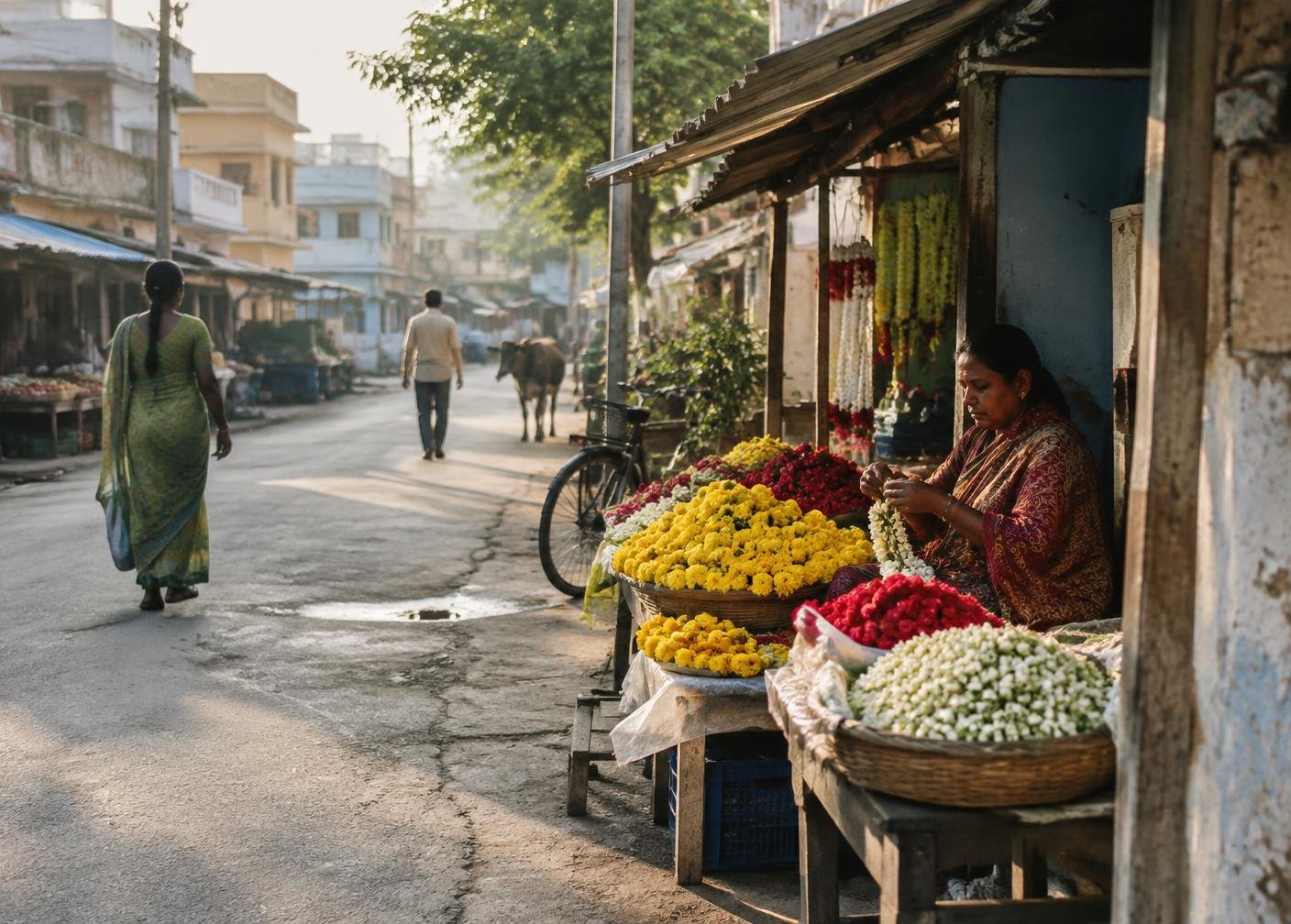
A pincode was designed to move post. It has since become the shorthand people use for value, safety, schooling and status, which is a great deal of weight for six digits to carry.
We use it differently. Before we take on a property we spend time in its pincode at three different hours, because a street that is calm at noon is not always calm at eight.
Shade is infrastructure
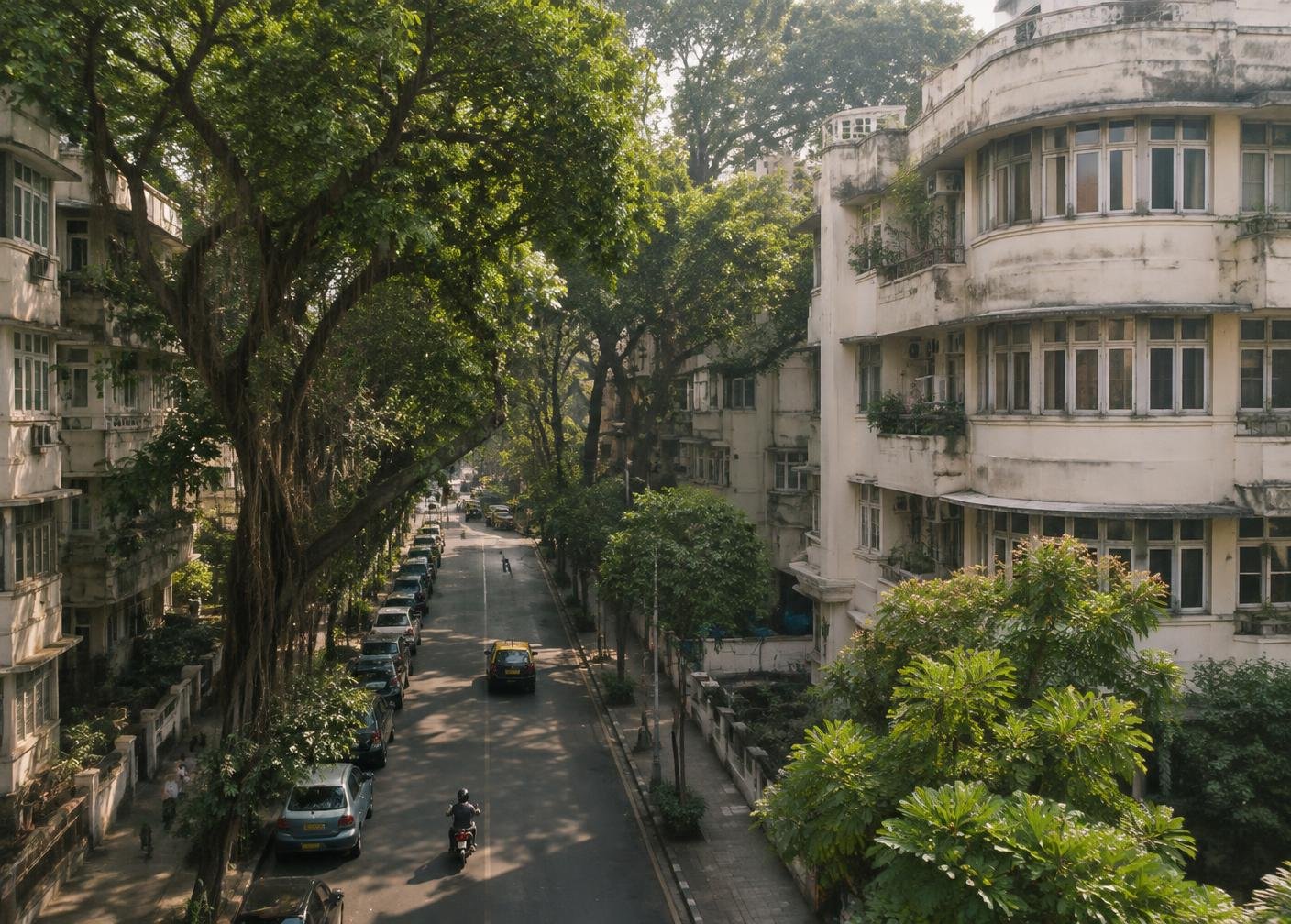
Mature trees change the temperature of a street by several degrees, and they change how people use it. A pavement under rain trees is walked on. The same pavement without them is not.
When we assess a location, tree cover sits alongside connectivity rather than below it.
Water tells the truth
Borewell depth, tanker dependence and monsoon drainage explain more about a neighbourhood’s next decade than any brochure will.
It is unglamorous information, and it is the first thing we ask for.